In the same way a song can make you think of a person, place or time, it can also inspire writers to develop chapters. Music can bring chapters, characters and moments to life. It is a great aid whilst developing your story.
The connection writers develop for their creations is personal, like a parent to their child. This is why sometimes criticism (no matter how constructive) can hurt. But, this post isn’t about that. This post is about the connection writers make with music.
Writing a novel is a long process. You develop a relationship with the characters, their environment and experience their highs and lows. I struggle with writing horror because I frighten myself. Then I can’t sleep!
Inspiration
In the same way a song can make you think of a person, place or time, it can also inspire writers to develop them. Music can destroy writers block and bring to life chapters, characters, places and moments.
Currently, the song that is really inspiring me to write a horror – if I can get over my fear of my own mind – is Ruelle’s “Monsters”.
I haven’t given up on this idea. Originally the idea was for the MC to be haunted by a demon (a mix of the urban legend of Slender Man, the manga character Orichimaru from Naruto and the Goblin King from Labyrinth). Although I am still struggling to get the outline right, I am now swaying towards this novel being part of my shifter series.
My story’s playlist
As I edited Drift, now Jewel of the Sea, for the umpteenth time, I created a playlist for the chapters. This playlist was added to Wattpad using YouTube links as I worked on improving the story. Some songs have been there since the start whereas others got added as the story developed.
Taylor Swift – Everything Has Changed ft. Ed Sheeran
Leona Lewis – Run
Mazzy Star – Fade Into You
Lykke Li – Little Bi
Hunter Hayes – Invisible
Christina Aguilera – Beautiful
Evanescence – Bring Me To Life
Birdy – Wings
Coldplay – Yellow
All Saints – Pure Shores
Angel Olsen – Windows
Wilco – Kamera
Seafret – Skimming Stones
Lauren Aquilina – Ocean <related chapter now cut>
Dorothy – Gun In My Hand
Katy Perry – Rise
Ellie Goulding – Starry Eyed
Ed Sheeran – Give Me Love
John Legend – All Of Me
Safety Suit – Anywhere But Here
Demi Lovato – Stone Cold
The Paper Kites – Bloom
The Ligthouse and the Whalers – I want to Feel Alive
Amer Run – I Found
Evanescence – Bring me to life
Ed Sheeran – Thinking Our Loud
Sometimes I hear songs and they inspire me to write (see 7, 8, 14 and 15). They draw up pictures and feelings in my mind and drive my imagination wild.
Editing
Other songs, I hear after I’ve written the story, usually whilst editing. They remind me of the vision I had and help me focus on what I need the chapter to deliver (see 12, 13, 20, 22 and 24).
I’m not a fan of editing. I spend way too much time being critical of my writing and ripping it apart. I don’t enjoy the process and if I could afford to pay someone to do it for me, I would! Having a playlist does make it a little more enjoyable and you can create one of all your favourite songs to keep you motivated.
Theme
When I first started writing Drift, “Starry Eyed” by Ellie Goulding was playing on the radio and resonated with the way the story felt to me.
Once I finished editing Drift, I found that the song that resonated with the overall feeling of the story had changed. The song is now “I Want To Feel Alive” by The Lighthouse and the Whaler.
Perhaps it’s a result of how the story has evolved or how my music tastes have changed over the years. The bottom line is, music fuels my imagination. It certainly makes editing more enjoyable.
Please share your playlists with me
If you have a writing playlist, please share it with me. I would love to listen to and to know why those songs made your playlist.
Felixstowe Book Festival wouldn’t be complete if it didn’t support the local writer groups. The festival is run by Felixstowe library so if you are looking for your local writing group I would suggest visiting your local library and asking the librarian if they have details of any. Maybe you will start one up?
Felixstowe Scribblers meet fortnightly at Felixstowe Library, and I was a regular attendee. The meetings set a prompt for writing, they sometimes do flash fiction and hold a quarterly competition to win the Bill Bunder Cup. They published my short story Cherry Blossom in their first anthology. The group is run by Dave.
Orwell League Writers (OWL) are an Ipswich writing group. I’ve not been to any of their meetings so can’t tell you much about the set up but I know a writer who won their annual writing competition. The group is run by Mia.
Both groups had come up with an activity for attendees.
Flash Fiction
Scribblers had prepared a number of words to act as writing prompts and placed them face down. Participants were encouraged to select one and then a timer was set and we had to write a short story.
My prompt word was ’weapon’ and I wrote a story inspired by The Handmaid’s Tale about a suicide bomber that is starting to doubt their cause moments before acting.
Character Development
OWL had created character sheets and got us all to create two characters that could meet at a train station.
Creating my two characters and imagining their reason for being at the station got me creating a story in my head. If I wasn’t so busy with other projects I would write it – like I needed another story idea. ?
Stay tuned, I promise the tale of my White Knight is coming soon…
July has been a challenging month for my writing goals. For Camp NaNo I decided to make a start on book 2, Diamond in the Sky but it has been full of distractions! I’m hoping August will be more productive for my writing.
Distraction 1: Course Work
I needed to finish my coursework for the Working Together Community Course. I must admit I had been putting off the assignments to work on my writing and as the deadline to submit approached I had to prioritise it and get it done. I have really enjoyed volunteering and everyone at the school has been lovely. On my last day, I got a card from the teachers and signed by all the children and chocolates.
Distraction 2: Blog
I didn’t make any progress on my Camp NaNo project until day 7 and I quickly realised that I needed to do some more planning. Not only that but my blog was also in need of some attention. I need to write up about all the fun I had at Felixstowe Book Festival. I then spent the next few evenings prepping some posts.
After a little plotting and scheduling, I was ready to write and decided to sign up to Mandi Lynn’s #10kWritingChallenge. I knew there was no chance I could write 10k in one day with my other commitments but I knew if I aimed high, I would achieve something great. I wrote 2,792 new words for Diamond in the Sky. I was back on track for my Camp NaNo goal.
Turns out Mandi Lynn didn’t make 10k either. She vlogged about her struggles and celebrated the words she did achieve. She encourages people to sign up to next months 10k challenge and win a pin.
Distraction 3: Important dates
The end of July and start of August have some important dates for me.
Husband distractions: It is my husband’s birthday month. I needed to sort out his gift and I wanted to take him out somewhere child free. I arranged for his sister to babysit. I also got Aria to print her feet in his card and Noah to write a personal message.
Also, last month, my hubby got a little neglected as the end of Jewel of the Sea got closer, so I promised to watch Stranger Things with him – which was awesome.
Noah distractions: My son was finishing his first year of school (Reception class).
I think it is nice for kids to make their teacher a card or gift so I had to come up with an idea and organise the craft.
We got to go to Noah’s first sports day. I also decided to arrange a night out with the playground mums and get the ball rolling on some summer play dates.
Aria’s distractions: Aria’s first birthday is at the start of August. I have been busy arranging her cake smash and splash and worked with the photographer to create a very personal experience (more coming soon).
I’ve also been planning her parties. Yes! That was ‘party’ as a plural. She is a very lucky girl.
Distraction 4: Pitching
SFFpip was this month. It was my first time taking part in this Twitter pitch event and I got a like by a publisher! Naturally, I have then had to research them to decided if the feeling is mutual.
If writing up about Felixstowe Book Festival was my distraction at the start of the month, then YALC was my distraction at the end. The closer the date got, the more excited I became. I went to bed early the night before and barely slept a wink. I can’t believe it, I pitched to two agents – one of them I have stalked on Twitter for years – and they both asked me to send them Jewel of the Sea – Aghhh!
Now, my distraction is trying to write the perfect query letter. As I have mentioned in previous posts, I’m pretty sure my letter stinks and is why I get rejected. I feel like an excited puppy chasing my own tail and equally terrified that when I bite, I am going to get hurt. I need to conquer my fear and be brave.
Conclusion
I was in two minds whether or not to do Camp NaNo as I knew I had a lot on already this month.
With a grand total of 9,886 words, I think it is pretty impressive what I achieved despite all the distractions. If I hadn’t given it a go, I may not have written anything this month.
I also feel the challenge has kept me in touch with my novel so when things calm down in a few weeks, I can dive straight back in.
How did your July writing goals go? Did you do Camp Nano?
This event was hosted by Phoebe Morgan who promised to share her advice on how to get published, attract an agent and attract an editor. It was held at the Sailing Club with stunning views of Felixstowe Ferry.
Introductions
Phoebe Morgan is the best selling author of The Doll House and works at Orion as an Editorial Director. She explained a little about the books she works on (crime, thrillers, women’s fiction and saga). She had created a presentation especially for us.
Before she started, Phoebe went around the room and got each of us to introduce ourselves and what we are writing and hoping to get out of the talk. There was something very endearing about Phoebe. People instantly warmed to her and wanted her to know about their writing. I think it is the way she appreciated and valued every writer in the room.
I shared that I have just finished editing Jewel of the Sea and sent it out to Beta Readers. I explained that I have queried a lot, been rejected a lot and then edited again and have lost count of the cycle. I confessed that I am now considering self publishing and believe my query letter and synopsis is not having the right effect on agents.
First Impressions
Phoebe’s talk began talking about bestsellers and popular genres and why these books are doing well. She emphasised why it is so important for writers to know what is trending when they are querying because this links to how it will be pitched to editors and publishing houses.
Phoebe had put together examples of pitches to illustrate how important it is to quickly get agents up to speed on what your novel is about in just one sentence.
Example: The Girl On The Train by Paula Hawkins – Woman sees inciting incident through her train window.
Phoebe told us what genres are trending right now. However, it is best to write the novel you want as these are constantly changing. She talked about why genre fiction is popular and why it is important for us to identify the genre where our novel will be placed. This helps the publishers identify where to market, package, design and price it. She pointed out how we need to be passionate enough about our books to promote it for two years!
Phoebe had collected examples of the first line of successful books and discussed how these sentences grip the reader right from the start. She pointed out how agents are often very busy and if they are not pulled in from the start, they will move on to the next. She pointed out how in a shop, a reader may pick up a book and look at that first line to decide whether to buy it or not.
Example: The Girl On The Train by Paula Hawkins – There is a pile of clothing on the train tracks.
Then, she got us to share the first line of our books and discussed their strengths. She also suggested that some writers should consider starting further into the story where the action starts.
She went on to talk about how to use suspense and pacing in our novels giving us tips on how to use these to make our novels a page turner. For examples, shorter sentences and chapters can speed up action but you can do the opposite for when you need to pull the reader in for more detail – there needs to be a balance between the two.
Ending a chapter on a cliff hanger can leave a reader needing to read the next chapter, to do this successful you need the reader to care about the character and be worried about them or the invested in the outcome. It helps to make the characters life full of obstacles – if it is too easy, it is boring. Obstacles create conflict.
Phoebe briefly covered different ways to structure your novel and why this is important.
Characters are incredibly important in your novel so Phoebe had collected a few tips to help us. In my notes I jotted down:
Not too many – you only need three to five main characters. If you have more then you can lose the reader as they won’t be able to connect with them. If you have too many, see if two characters can be merged together to fulfil one role.
Zoom in technique – Imagine a lens and zoom in and think of little things that makes the character who they are.
Back stories – Make sure you know your characters back stories, even if this doesn’t come into the story it will influence who they are and make them more vivid when you write.
Motivations – Understand what drives your characters. What are their goals and what they want to achieve, etc.
Likeable? – It is not necessary for the reader to like your main character whoever readers do need at least one character they can emphasise with.
Phoebe then got us to think about one of the characters in our novel and write for five minutes about their backstory. I chose Luna who is a secondary character but her back story and actions are the catalyst for the entire series. She is a character I need to know inside and out. I may one day write a short story about her.
Roles
She then told us about the steps to getting published. There were twelve steps! I’ve always been focused on ‘getting an agent’ that I have not thought much more about ‘what next’. It turns out there is a lot that happens after you get an agent, and a lot that happens after you an editor and after all that, when you finally get an offer from a publisher, you can say no.
Phoebe went into more detail about what an agent does and how to pitch one. I felt like I knew a lot of this as it is something I’ve done a lot of. Phoebe was able to recommend some good agents and resources like The Writer’s and Artists’ Yearbook.
She then told us what editors look for. It was very insightful to hear this as the agent will be looking for these things in your query. The agent will be trying to figure out whether they can pitch your novel to editors. Here are the main things editors want:
A strong, clear, one-sentence hook
A good sense of voice – character needs to feel new and unique
Fill a spot on their list – keep an eye out for out for wish lists
Pleasure to work with – they will check out social media to see if you take writing seriously but this is not a deal breaker.
A clear vision – they need to believe in the book and be able to see it doing well.
She ended by warning us that rejection is something almost every published author has experienced. She gave us tips on how to deal with and was very encouraging that a rejection doesn’t mean give up.
Summary
She finished by giving us a list of resources for further information and how to contact her if we have further questions. She also took our emails so she could send us a copy of her presentation.
Phoebe was so lovely, approachable and genuinely wanted to help everyone in the room. Writers who get to work with her are truly blessed.
I did have a damsel in distress moment in the car park where a knight in shinning armour came to my rescue. More about this in my next Felixstowe Book Festival post.
I hope you have found this useful. If you want to connect with Phoebe, you can find her:
I booked this workshop with no idea what I had got myself in for. As I arrived, I realised in the scorching hot sun, I had forgot to bring my bottle of water and was about to spend two hours in a container.
Thankfully, Richard O’Neill came prepared with water, notebooks and pens for everyone. We felt rather spoilt despite our unusual setting. Richard’s wife Louise helped us all settle into the container, where we sat on blankets, cushions and someone had brought a camping chair.
Richard began the session but talking about Containment. He talked about his background and the things that have held him back and how he has learnt to consider whether a barrier is his perception or a reality. Sometimes, all it takes to free yourself it to change the way you think.
I could relate to this a lot. For a long time, I described myself as an aspiring writer because I don’t have anything published. Then, I realised that I am a writer because I write. And, I write a lot. I also felt my writing wasn’t good enough to share as I was not good at English at school despite enjoying it, I certainly don’t have a degree. But, I realised that my writers voice is what sets me apart, it makes my stories unique and my writing is good without some fancy certificate.
Richard then asked us to imagine we were somewhere else. Where would we want to be? He then left us to write about this place. The he got us all to share what we had written and we had all wrote something different. He pulled out parts that he liked from our writing.
I wrote about Mauritius. I went back to the white sandy beaches and crystal blue sea that I enjoyed for my honeymoonwith a cocktail in hand.
Richard talked about the different constraints that people have. He talked about how he has delivered workshops in prison and that those students were obviously physically constrained within those walls. He spoke about a project he is involved with about diversity in books and how the subject is much deeper than just the colour of a persons skin. He explained how he grew up living as a traveller and the constraints the lifestyle presented.
Then Richard asked us to think about our own barriers to writing and got us to write them down and think about how to overcome those barriers. Some of the participants wrote down a paragraph but I chose to do a spider diagram as that is something I like to do when problem solving.
It was a very enlightening experience. I do have a lot of barriers to my writing but I choose to overcome these because writing is important to me. Everyday, I don’t give up.
Richard & his wife did a tremendous job at making everyone feel welcome. Richard is an incredibly charming man who made us to think and question. He encouraged everyone’s writing and didn’t make anyone feel on the spot or stupid. I think we all came away from the session feeling motivated – I know I did.
What are your barriers to writing? Can you break free from your containment?
To learn more about Richard O’Neill and his books, you can follow him on Twitter or visit his website.
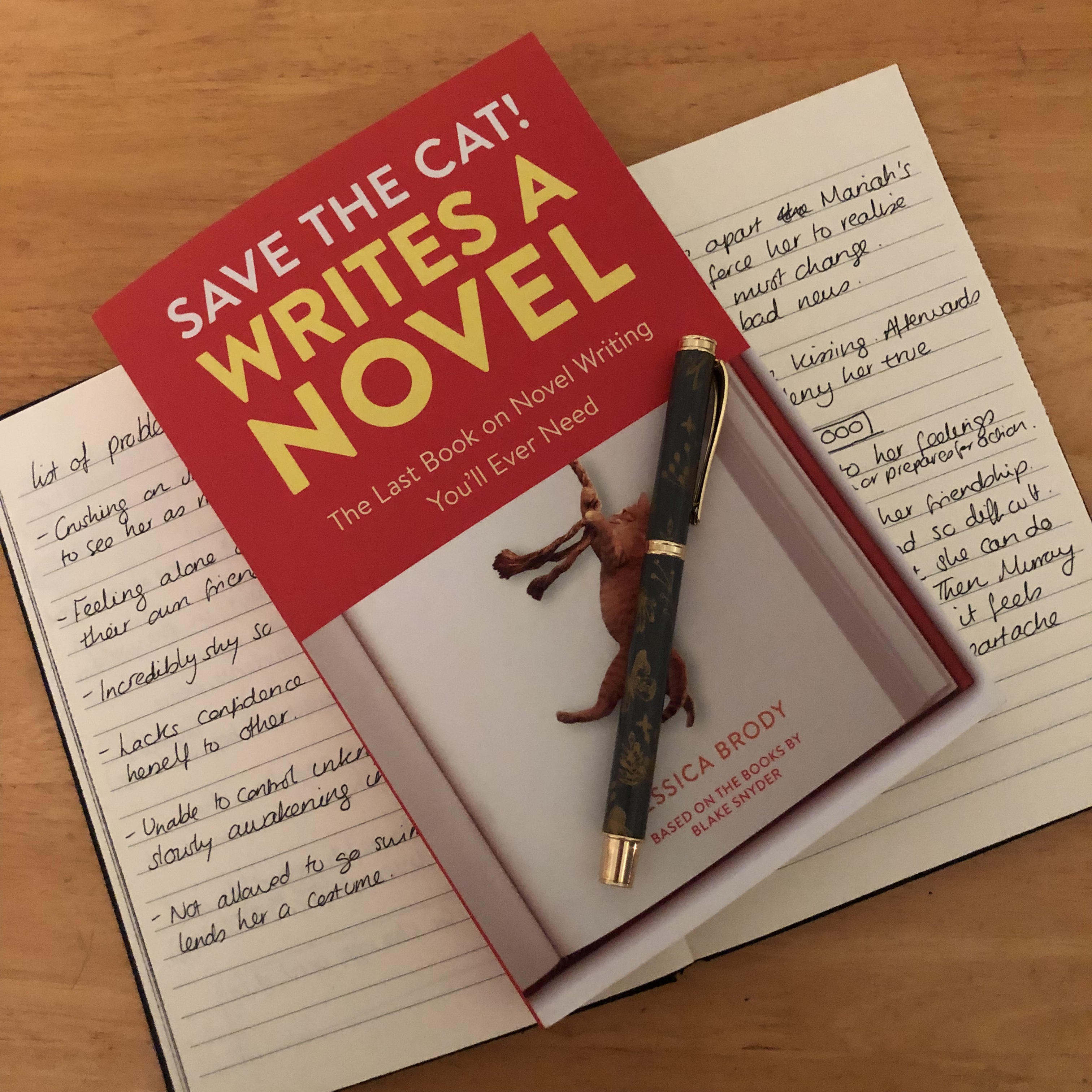
This book came highly recommended on Instagram and when Bethany Atazadeh and Brittany Wang did their #STCExperiement – YouTube videos of them using the book to outline a novel – I decided I had to get it so I could join in.
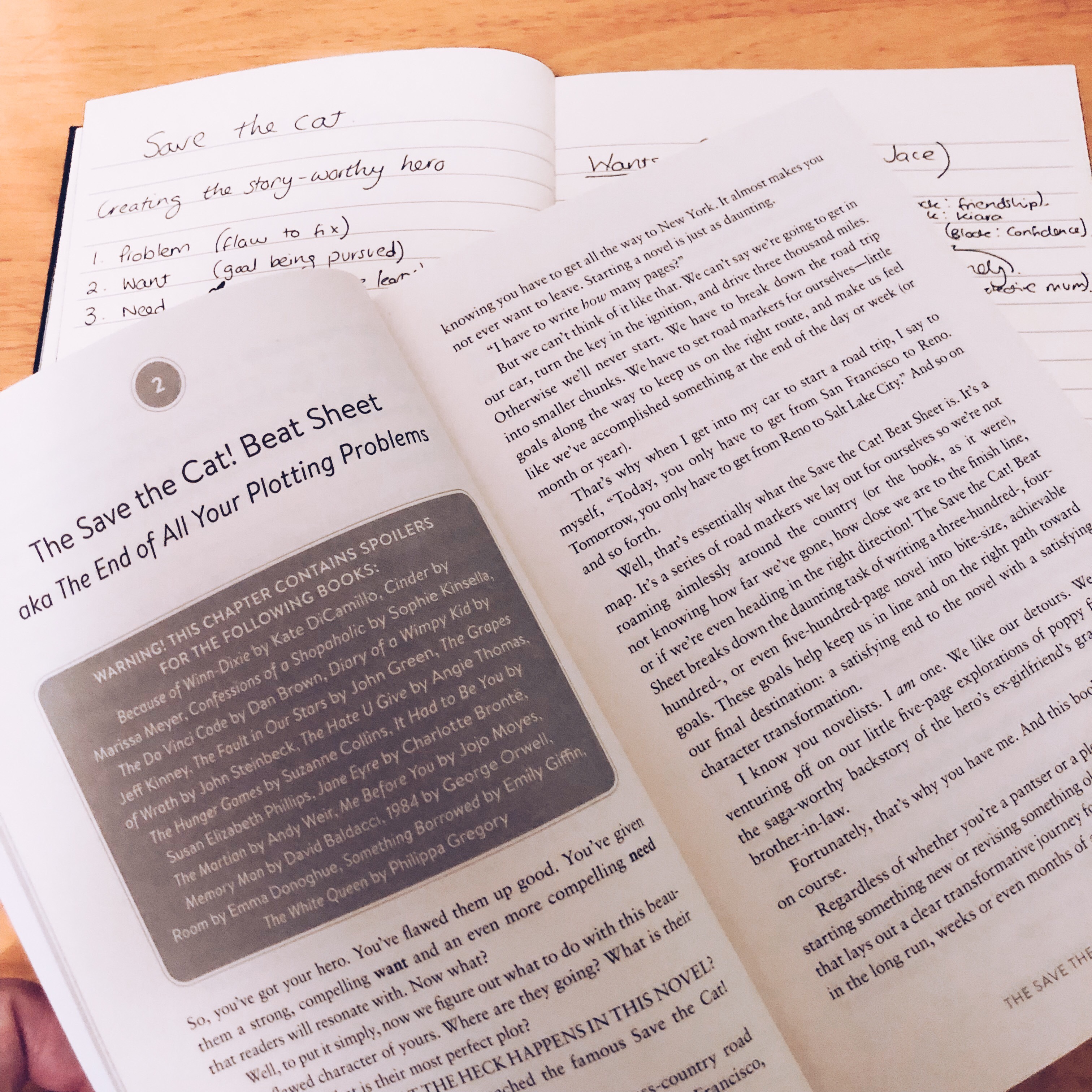
The book is based on books by Blake Snyder who writes guides for scriptwriters. Jessica identified that the best novels use the same structure. In this guide to writing she adapts the ‘Save the Cat’ beats for novel writing. She also gives plenty of examples form best sellers – even if you haven’t read them you will know their names.
How it works?
This guide splits the novel into four Acts. Each act is broken down into beats. The Beats have names and descriptions to prompt you what needs to be happening in your novel.
Once you read the book you will start noticing the beats in films you watch. It is a real eye opener.
How I used it?
Editing (Jewel of the Sea)
When the book arrived I had just decided that Jewel of the Sea needed yet another edit! I wanted to re-write the ending, however, that’s not as easy as just jumping to the end and writing it. There are little details that need to be woven in throughout the novel.
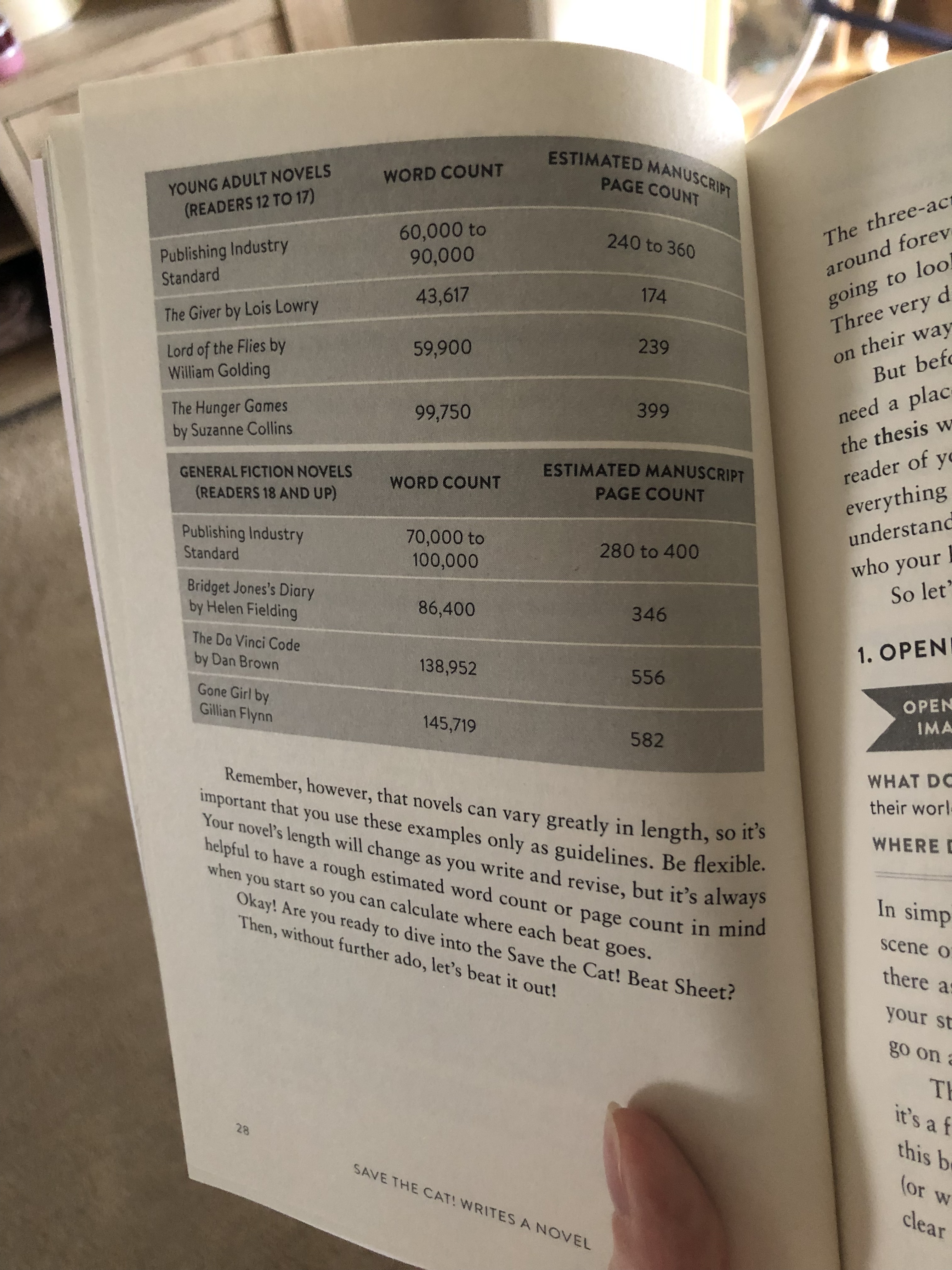
After reading STC, I created a spreadsheet based on my word count and used the percentages to see where certain beats should be happening. It turned out I had a lot of the beats but in some places my pacing was off. I then used STC to help with that.
Plotting Act 1 (Scarlet Dresses)
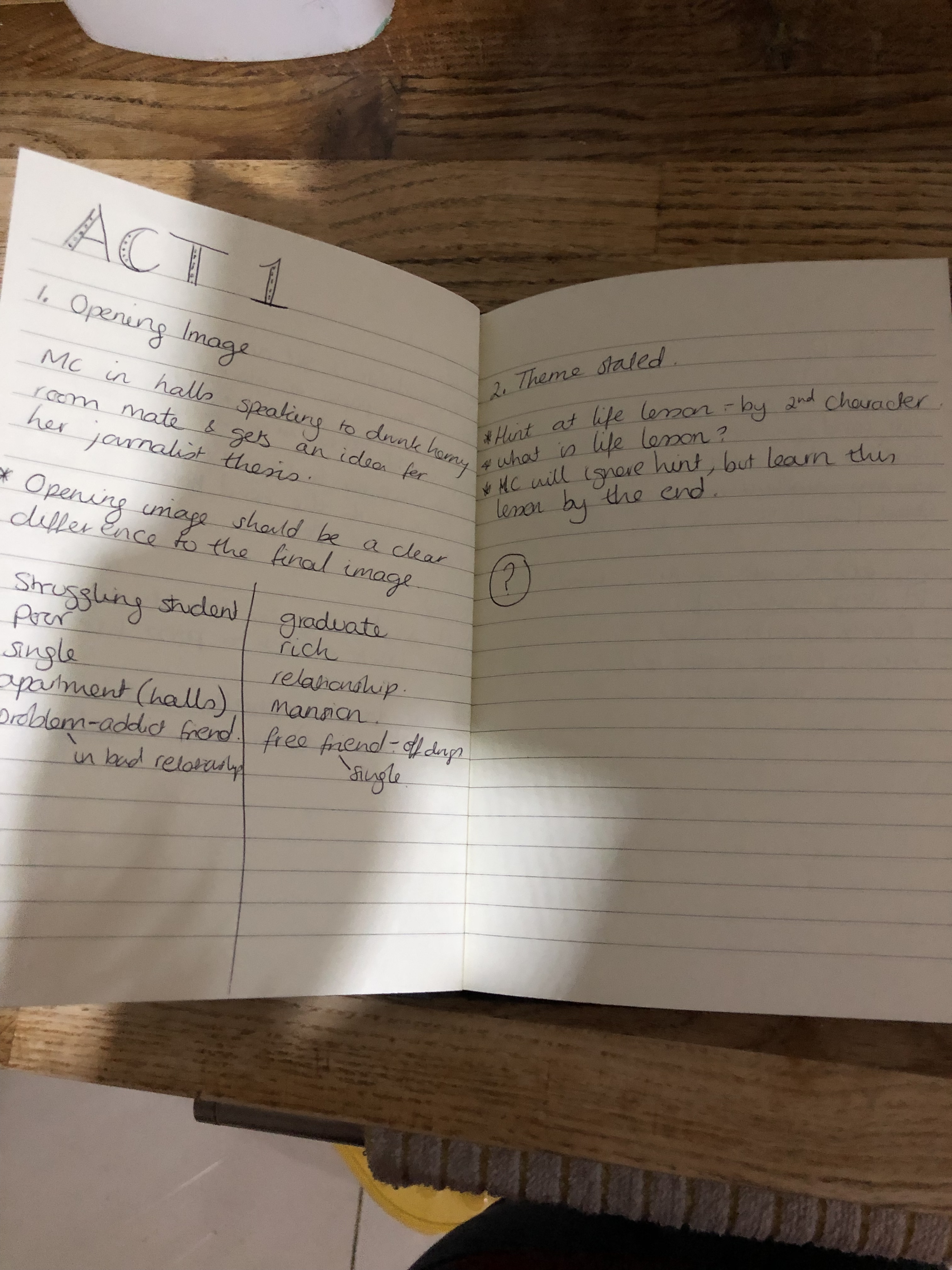
For Camp NaNo April, I used STC to draft out the first Act for a new novel called Scarlet Dresses. During the challenge I made a really good start on this novel.
My only hold up was that I felt my characters were a bit flat as I had not spent long enough developing them. I feel the story had got potential so I plan to return to this project and complete it… one day.
Plotting and editing (Diamond in the Sky)
This month, I decided to do Camp NaNo July. Jewel of the Sea is out with Beta Readers and I need to start thinking about writing the next novel in my shifter series. Now, Diamond in the Sky has been started but never finished. Now I am more familiar with STC, I decided to use it for both editing and plotting.
To start with I need to edit what I already have. I have used STC to plot the first Act and created my spreadsheet to check the pacing is right. There are a few instances where it is slightly off and I have noted this on my spreadsheet to check later. First, I want to get the novel written.
The next step will be to use STC to plot the rest of the novel – the unwritten chapters. I will use STC to check that when I create the different beats that I am getting the pacing right.
Final thoughts…
This book has changed the way I write. I have always been a pantser and found editing incredibly hard. Writing without a plan often can take you off on wayward paths that are not necessary or haven’t been preempted to create the right impact. This results in a lot of editing – something I hate.
With STC, I feel have a guide keeping me on track and I can check my pacing is working. Previously, my outline was incredibly brief and left a lot of gaps for me to fill but having a plot keeps me on track and I don’t get stuck.
If you need help plotting and with pacing, then I highly recommend this book. Now, it is always close to hand and I wouldn’t write a novel without it. I love it.
Do you have any writer resources that you swear by?
I am never short of ideas to write, just time to work on them. Today, I am going to share with you where I get my inspiration so you too can have an abundance of ideas.
Where I get my inspiration:
Art
My story Jewel of the sea was inspired by a photograph of a couple kissing underwater.
Music
Listening to songs can often drive emotions and take you to places that creates a story.
Films/Shows/Books
Sometimes I am watching or reading something and it inspires me to write my own story.
Dreams
Not everyone can remember there dreams but if you can your subconscious can be a great source of ideas.
People watch
Watching the world go by gives plenty of opportunities to generate ideas or characters and these can be the start of something.
Take a walk
Not only is it a great way to clear your head but whilst you are out you will see things to spark ideas.
Experience new things
Learning and doing new things will generate new ideas. You can also learn about new things from other people sharing their experiences with you.
What if?
Asking what if. Everytime you ask this question it pushes you to think and imagine what next and start building a story.
History
You can use experiences from your own past or research historical events or periods to get your imagination going.
I would love to hear whether you use any of the above methods to come up with ideas and I would love to hear of any methods you use that I’ve not mentioned.
Writing a novel is mainly a solitary project that you work on for months. And, when you type ”The End” it is a huge achievement, but what do you do next?
For me, I sat alone at my PC. After editing 85k words there was nobody around to celebrate with me. To be honest, that isn’t the end.
If you have been following my blog, you are probably aware that my novel is posted on Wattpad so when I finished editing, it was very easy to submit my novel into their annual competition.
Beta Readers
While it is sitting on Wattpad being judged by the judges, I decided to send my novel to a select group of beta readers to get feedback. 07I will take their feedback into consideration and make any necessary amendments and then I will decide whether to query agents, self publish or enter other competitions.
I am also part of World Indie Warriors which is a collaborative group that are supporting authors in the self publishing industry or those aspiring to self publish. Meeting them has been a very enlightening experience and as a result I feel more motivated and informed about self publishing. It no longer feels like a scary unknown.
I am also attending a marketing course with Pagan Malcolm on book prompting which will be beneficial whichever route I take.
Next Project
Although I’ve taken a creative break, I have already started plotting the next novel. I am going to rework and finish Diamond of the Sky. This will be my project for Camp NaNo (July 2019).
Read
This summer, I will be catching up on my reading. Reading is a great way to continue to develop my writing skills as I soak up the methods others have used. It is also a great way to support other writers.
What do you do when you have finished writing a novel?
You may have caught my previous post where I reflected on my progress so far this year towards my annual goal. As we enter into Summer, I am evaluating where I am at and setting myself some new goals for the next quarter.
Social Media
Blog (Word Press): To continue to post at least twice a week keeping to my content schedule as much as possible.
Instagram: To maintain the new connections I have made and continue to engage with them and share content about my writing.
Twitter: Continue to share links to my content on Twitter and connect with writers on the platform.
Facebook page: To brainstorm how I can use this to connect with more writers.
YouTube: To be brave and get in front of the camera and start sharing video content.
Tumblr: Share Instagram and Word Press content to this platform.
Writing
Jewel of the Sea: Enter into the Wattys. Put novel out to Beta Readers. Take part in September’s #PitMad. Work on my query letter.
Diamond in the Sky: Re-plot novel, edit existing version and write ending.
Festivals: Attend festivals:
Felixstowe Book Festival
YALC
Wow-Con
Personal
Working Together Course: Finish this course.
Crafts: Make time at least once a week:
Planner: continue to use Carpe Diem planner
Pocket letter: write another pocket letter
Scrapbook: Do at least one page
Crochet: Finish Aria’s blanket for her birthday
Read at least four and a half books by the end of September: I have read three books so far this year. I’ve started two books I have just not been able to get. I will most likely buy new books at the festivals.
Development
Writer courses: Continue to take advantage of any free courses that come my way if I have the time to do these.
Resource book: Buy another writing help book. I am considering the Emotion Thesaurus.
What are your goals?
I shall review these again at the end of September. I often feel like I haven’t achieved much until I acknowledge what I have managed to do. Will you be setting any goals?
This article is about how to choose the best Point Of View for your story.
View point examples
Here are some examples of the view points you may consider using for writing your story. It helps to understand these when making your decision.
NB: These examples have a Halloween horror theme…
First person: when the whole story is told from their view point. A good way to show their inner emotions and thoughts. Uses “I” and “We”.
My clammy hand shook as I pushed open the door and gagged at the vile stench.
Second person: rarely used in fiction as it can sound like you are giving instruction but good for choice-adventure style stories. Uses “You”.
As you enter the dimly lit room, the sharp smell of rotting corpses makes you gag.
Third person: the story is told as if you are an observer watching what is taking place – very useful for stories with many characters. Uses “He”, “She”, “It” and their name.
There are different types of third person.
Limited Third Person: This will follow a MC but will give the reader the experience of watching what is happening, although it is still possible for the writer to share the MCs thoughts and feelings. Sometimes called “Close Third Person”.
Her sweaty hand opened the door. As she entered the room, she gagged at the vile stench.
Omniscient Third Person: The reader watches the scene as the writer tells them all the characters thoughts, feelings and background and can even share their own thoughts during the story. Sometimes called “Distant Third Person”.
If she had any sense, the stench should have deterred her from entering the room.
Single Character
If you decide that the story will follow a single character then you will want to choose either:
First person: Choose to write in first person view if it is important for your reader to know your character intimately. You will need to share their inner most thoughts and feelings and they will have no secrets from the reader.
Limited Third Person: Alternatively, you can choose to write in Limited Third Person view. This isn’t as intimate but the reader is watching what the MC is doing and you can share their thoughts and feelings with the author.
Readers enjoy stories with a single main character because they can get to know them and understand their actions and reactions. It is easier for the reader to form an attachment as they will care whether your character succeeds or fails and this keeps them engaged.
Multiple Character
If you choose to tell the story from multiple characters this can enable you to show more of what is happening and is less restrictive.
FirstPerson: If you chose to tell the story in first person, make sure that when you switch between characters it is easy for the reader to follow. For example, you could start a new chapter or section that is headed with the new person’s name i.e. “Gwyn’s Point of View”.In addition, you will need to ensure each character has a strong and unique voice so they are easy to identify.
Limited Third Person: Similar things to consider as in first person, although, it can be easier to establish who is being followed as the writer can give the characters name within the narrative.
Omniscient Third Person: This point of view is often described as being ‘god like’ as the writer knows and shares everything about the characters. The writer can move from character to character within a chapter and is particularly useful when writing action.
Mixed: You could use different view point styles for different characters to make it clear when the voice has changed. The risk of this is that readers get comfortable with a certain POV style and if it is suddenly changed, it can throw them out of the story.
Readers can struggle with attaching to multiple characters as it doesn’t allow them sufficient time to get to know them and care about their conquests. In addition, they may like one voice and not be able to stand the other voice which could ruin the story for them.
Which to choose?
Re-write
If you write a chapter and it’s not working, simply re-write it in another POV or from another characters perspective. The change in voice could solve your problem. Don’t be afraid to try a POV you’ve never tried before.






 First person: Choose to write in first person view if it is important for your reader to know your character intimately. You will need to share their inner most thoughts and feelings and they will have no secrets from the reader.
 FirstPerson: If you chose to tell the story in first person, make sure that when you switch between characters it is easy for the reader to follow. For example, you could start a new chapter or section that is headed with the new person’s name i.e. “Gwyn’s Point of View”. In addition, you will need to ensure each character has a strong and unique voice so they are easy to identify.